
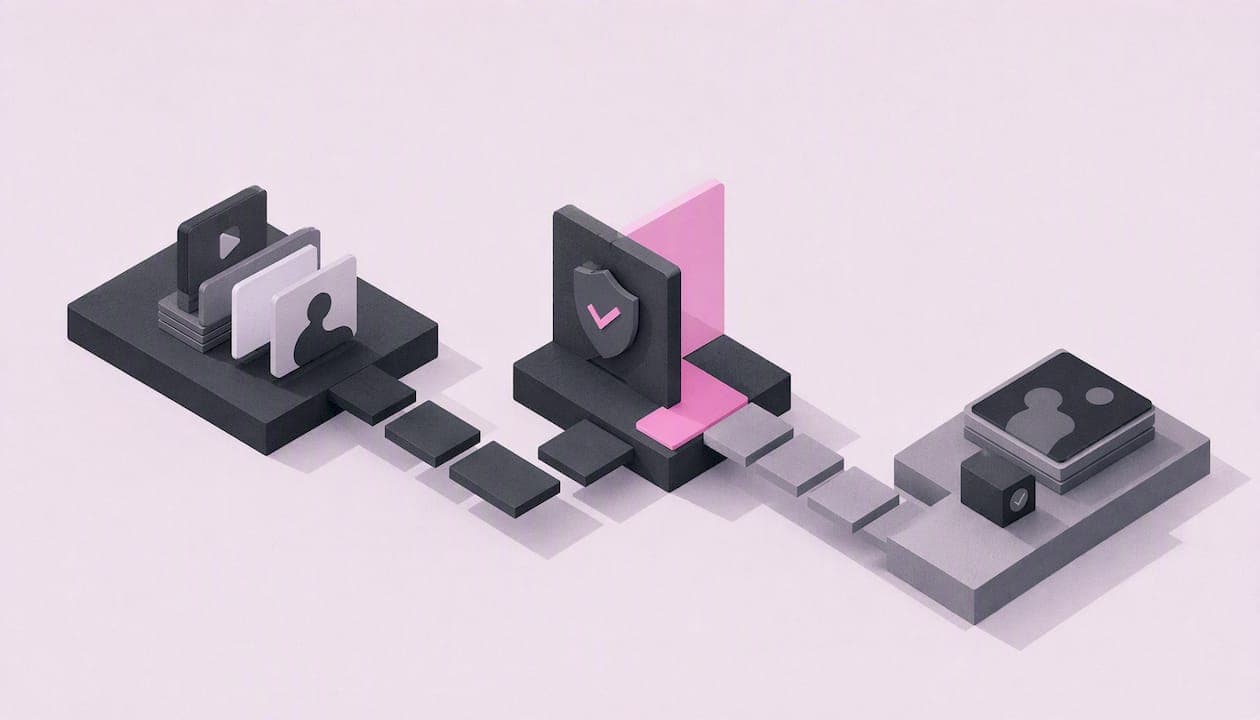
Yes, you can monetize AI-generated adult images and clips, and Fanvue is the safer, purpose-built home for it. OnlyFans allows AI content too, but only when it depicts your own verified likeness. Either way, three rules aren't optional: disclose the content is AI-generated, never use another person's likeness without consent, and keep age-safety checks airtight. From there, subscriptions, PPV clips, custom orders, and DMs carry the actual income.
TL;DR:
- Building an original AI persona and clearly disclosing it reduces enforcement risks on Fanvue, while OnlyFans restricts AI content to images featuring the verified owner.
- Revenue typically stems from subscriptions, pay-per-view clips, custom requests, and tips, with private messaging generating the highest earnings.
- Pricing should be balanced to reflect content quality and consistency, with median monthly income often below $500, mainly from DMs and personal interactions.
- A strict workflow including character reference storage, resemblance checks, and documented disclosures is essential to avoid content flagged or account bans.
- Using a character profile system supports content consistency, especially when exported with embedded metadata and watermarks, enabling easier compliance and audits.
Table of Contents
- How to Monetize AI Content on Different Platforms
- How Do Creators Actually Make Money From AI Content?
- What Should You Charge, and What Can You Realistically Earn?
- How Do You Create and Publish AI Content Without Getting Flagged?
- Where Do You Find Subscribers, and How Do You Keep Them?
- What's the Fastest Compliance Checklist Before You Publish?
- When Is AI-First Monetization Worth It (and When Isn't It)?
- OnlyNudes: Faster Production Without Skipping the Paperwork
- Policy Pages Worth Bookmarking
- Sources
- FAQ
How to Monetize AI Content on Different Platforms
Platform choice determines what you're legally and contractually allowed to sell, not just what looks better in your bio.
Fanvue built an actual AI creator category, which changes the math significantly. Creators can run a fully synthetic persona; generate images and short clips from scratch, and disclose that openly without penalty. The platform requires the disclosure to sit in a bio, caption, or watermark, and it reviews flagged uploads with a Reasonable Person's Test applied by multiple moderators. Once a profile carries an AI tag, subscribers who later complain the content "isn't real" generally aren't entitled to a refund on that basis, since they knew what they were buying.

OnlyFans takes a narrower stance. AI-manipulated or AI-assisted content is allowed only when it clearly depicts the verified human who owns the account. A fully synthetic persona with no real anchor is a compliance gray zone at best, and OnlyFans backs this with biometric ID checks and deepfake detection tied to the verified creator. Push past that line and you're risking discovery, forced refunds, or outright forfeiture of the account.
What this means in practice:
- Fanvue: build an original AI persona, disclose it plainly, monetize with lower enforcement risk.
- OnlyFans: use AI to enhance or stylize content of yourself, always disclosed, never someone else's face.
- Both platforms: undisclosed AI content is a bannable offense, not a gray area.
- Cross-posting: keep separate disclosure language per platform since Fanvue's AI content policy and OnlyFans' verified-identity rule aren't interchangeable.
How Do Creators Actually Make Money From AI Content?
The format you sell in matters more than the fact that it's AI-generated. Subscribers pay for structure and consistency rather than novelty alone.
- Subscriptions. Price around a steady content cadence, three to five posts a week works well for AI-heavy feeds, and band your tiers so a base subscription buys access while a mid tier adds exclusive sets.
- Pay-per-view clips. Price by length and exclusivity. A 30 second custom clip sells differently than a 3 minute themed drop; scarcity (limited release windows) pushes conversion harder than length does.
- Custom orders. Fans pay a premium for a specific scenario or outfit built around your character profile. This is where AI production speed actually pays off, since you're not scheduling a shoot to fulfill one request.
- Tips and DMs. This is where the real money lives. Personalized replies, even short ones, consistently outearn passive feed content because they feel one-to-one.
- Bundles and episodic drops. Package a themed set as a multi-part series rather than a single post. It gives subscribers a reason to stay through the next release instead of canceling after one purchase.
Decide early whether you're answering DMs yourself, hiring a chatter, or using limited AI-assisted drafting for replies. Fully automating fan interactions tends to erode the personal connection that drives tips in the first place.
What Should You Charge, and What Can You Realistically Earn?
Price too low and you signal low value; price too high before you have proof of consistency and you lose conversions before subscribers see your feed.
- Subscriptions: typically low to moderate monthly prices for most AI-only creators; higher tiers work once you have a themed catalog and a reliable posting schedule.
- PPV clips: priced depending on length and exclusivity; custom character requests can run higher.
- Custom orders: priced per request, often at a premium since you're producing something not available in the general feed.
Reality check: Industry reporting on AI-only accounts finds median monthly income is often under $500 per operator, with DMs and private interactions accounting for the majority of what top earners actually make. Treat subscription revenue as the floor, not the ceiling.
Budget for the actual cost side too: generation credits or subscription software, occasional promotion spend, and your own time answering messages. Subtract that from gross revenue before you compare your numbers to anyone else's screenshots. Whatever you earn is taxable income in your jurisdiction, so keep dated records of payouts, credit purchases, and any refunds issued.
How Do You Create and Publish AI Content Without Getting Flagged?
A repeatable workflow protects both your account and your subscribers' trust, and it takes less time than rebuilding a banned profile from scratch.
- Build a character profile. Store reference images for your AI persona so every generated photo or clip matches the same face, body type, and style across sessions.
- Run a resemblance check. Compare new outputs against your stored references and against public figures to rule out accidental likeness issues before anything goes live.
- Screen for deepfake and age-safety risk. Use detection tools calibrated for adult content, since generic thresholds tend to over-flag legitimate posts.
- Disclose visibly. Add an AI label to your bio, the caption, or a watermark, whichever fits the platform's disclosure requirements.
- Log everything. Save the detection report, the disclosure timestamp, and the file metadata together. If a post ever gets appealed, this is your evidence.
Pro Tip: Name your files with the character name, generation date, and a version number. When you're managing dozens of sets, a clean naming convention is the difference between finding your audit trail in seconds and rebuilding it from memory during a dispute.
Mixing AI-generated material with any human-origin content you produce yourself needs the same disclosure discipline. Subscribers don't mind AI content nearly as much as they mind feeling misled about it.
Where Do You Find Subscribers, and How Do You Keep Them?
Traffic without retention just burns promotion time. The funnel that works for AI creators looks similar to any adult creator funnel, with one twist: your disclosure has to survive the promo stage too.
- Traffic sources: cross-post teaser content to platforms that allow it, engage in niche adult forums, and route everything through a single link-in-bio page.
- DM strategy: treat DMs as the retention engine, not an afterthought. Platforms that require a human to send certain message types mean you can't fully automate this layer even if you wanted to.
- Content cadence: limited-time drops and episodic story arcs reduce churn better than a flat, unstructured feed.
- Promo disclosure: label AI content in your promotional posts, not just your paid feed. A subscriber who discovers the mismatch after paying is a chargeback waiting to happen.
Pro Tip: Save one evergreen "About Me" post that explains your AI disclosure in plain language, then pin it. It answers the question before a skeptical fan asks it in your DMs.
What's the Fastest Compliance Checklist Before You Publish?
Run this before every batch goes live, not just once when you set up the account.
- Disclose AI involvement clearly in your bio and again in the caption or watermark on the content itself.
- Never generate or post a likeness of another real person, public figure or private individual, without documented consent.
- Run automated detection for deepfake risk and age-safety before publishing, and save the report.
- Store a dated audit log covering verification, disclosure, and any moderation flags tied to each post.
- Keep your consent documentation and identity records separate from your content files, but easy to produce if a platform requests them.
When Is AI-First Monetization Worth It (and When Isn't It)?
AI production genuinely saves time and gives you continuity a solo creator managing shoots can't match, but the income ceiling on fully synthetic personas still runs lower than a strong human-anchored account. If privacy is your real goal, a faceless human strategy is worth testing before you commit to a fully AI persona on a mainstream platform. Fanvue is the better lab for AI-native experiments; if you ever cross-post to OnlyFans, keep your documentation airtight.
— Max
OnlyNudes: Faster Production Without Skipping the Paperwork
Some AI content generation platforms run on prepaid credit packs, so you generate photos and clips as you need them without a monthly subscription eating into a slow month. A character profile system can store your persona's reference images so every set keeps the same face and body consistent, which supports the continuity check your resemblance workflow depends on.
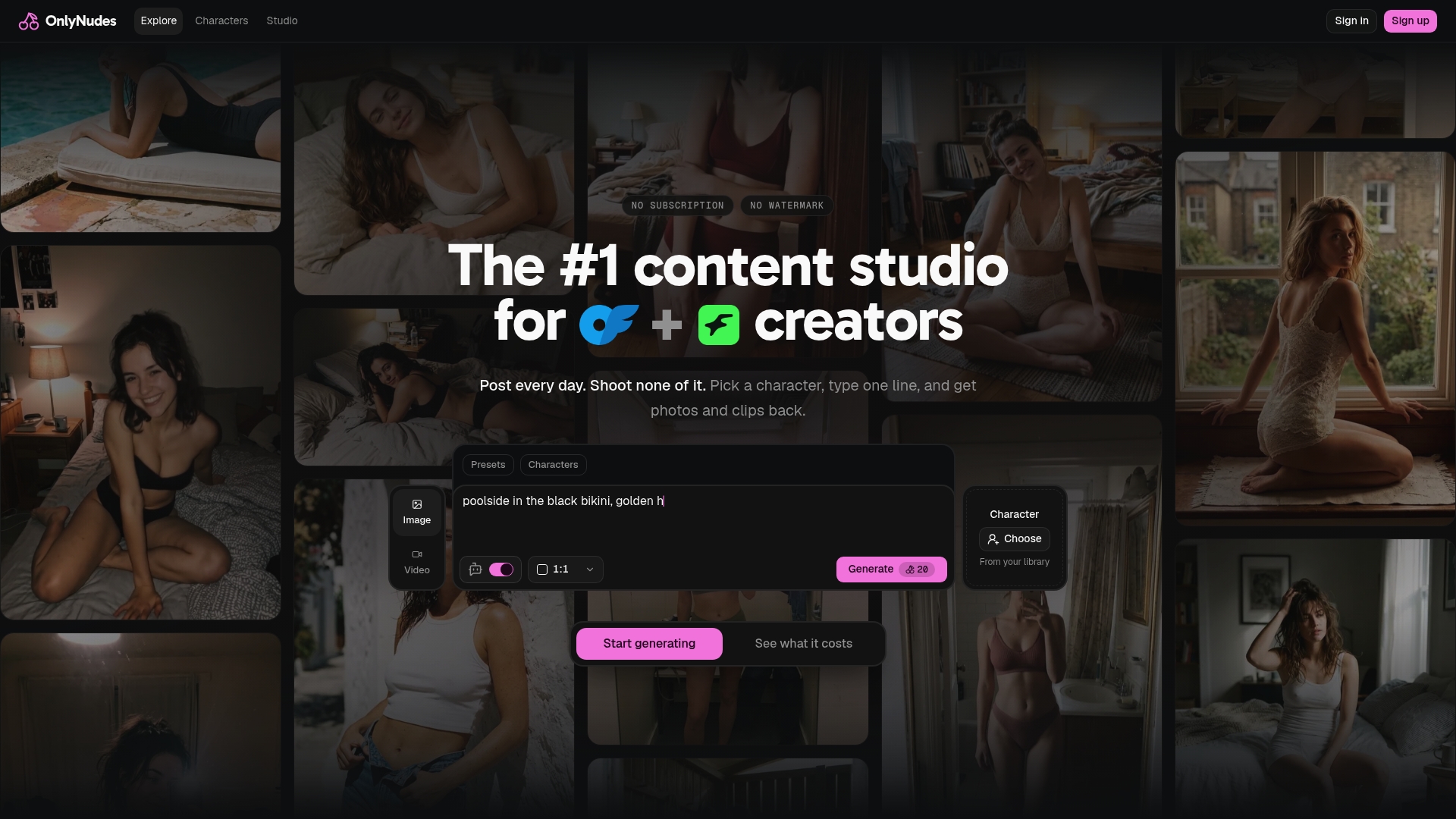
That matters because the compliance workflow above only works if your production process actually supports it. Some platforms let you export content with metadata and watermarking intact, so your disclosure and audit log requirements are handled at the generation stage instead of bolted on afterward. Whether you're building for Fanvue's AI creator category or anchoring content to your verified identity on OnlyFans, the same character profile carries across both.
Start small: acquire credits, generate one disclosed test post using stored character references, and log the detection and resemblance outputs before publishing. That gives you a working template you can repeat for every drop after.
Policy Pages Worth Bookmarking
- Fanvue's AI Content Guidelines and its Help Centre article on AI disclosure
- Fanvue's community guidelines for banned content categories and enforcement steps
- OnlyFans AI Content Policy & Compliance Guide for verified-identity requirements and detection thresholds
Sources
- Is AI content allowed on Fanvue? | Fanvue Help Centre
- AI Content Guidelines
- How do I know if a creator is AI? | Fanvue Help
- Fanvue community guidelines
- OnlyFans AI Content Policy & Compliance Guide (2026)
- AI OnlyFans Model: Full Walkthrough + Why Most Fail (2026) — B9 Agency
FAQ
Can you legally sell AI-generated adult content?
Yes, on platforms that permit it with disclosure, Fanvue explicitly supports AI creators, while OnlyFans allows it only when the content depicts the verified account holder.
Do you have to disclose that content is AI-generated?
Yes, both major platforms require visible AI disclosure through a bio note, caption, or watermark, and undisclosed AI content risks removal or a ban.
How much can you realistically earn from AI-only content?
Industry reporting puts median AI-only operator income under $500 per month, with DMs and personalized interactions driving most of what top earners make.
Can you use a fully synthetic persona on OnlyFans?
It's high risk. OnlyFans ties AI content to your verified identity and uses biometric checks, so a persona with no real anchor faces a much higher chance of enforcement.
What tools help keep AI content consistent across posts?
A character profile system that stores reference images, like the one built into OnlyNudes, keeps the same face and body consistent across every generated set.